
Kitchens
Microcement Kitchens Cambridge
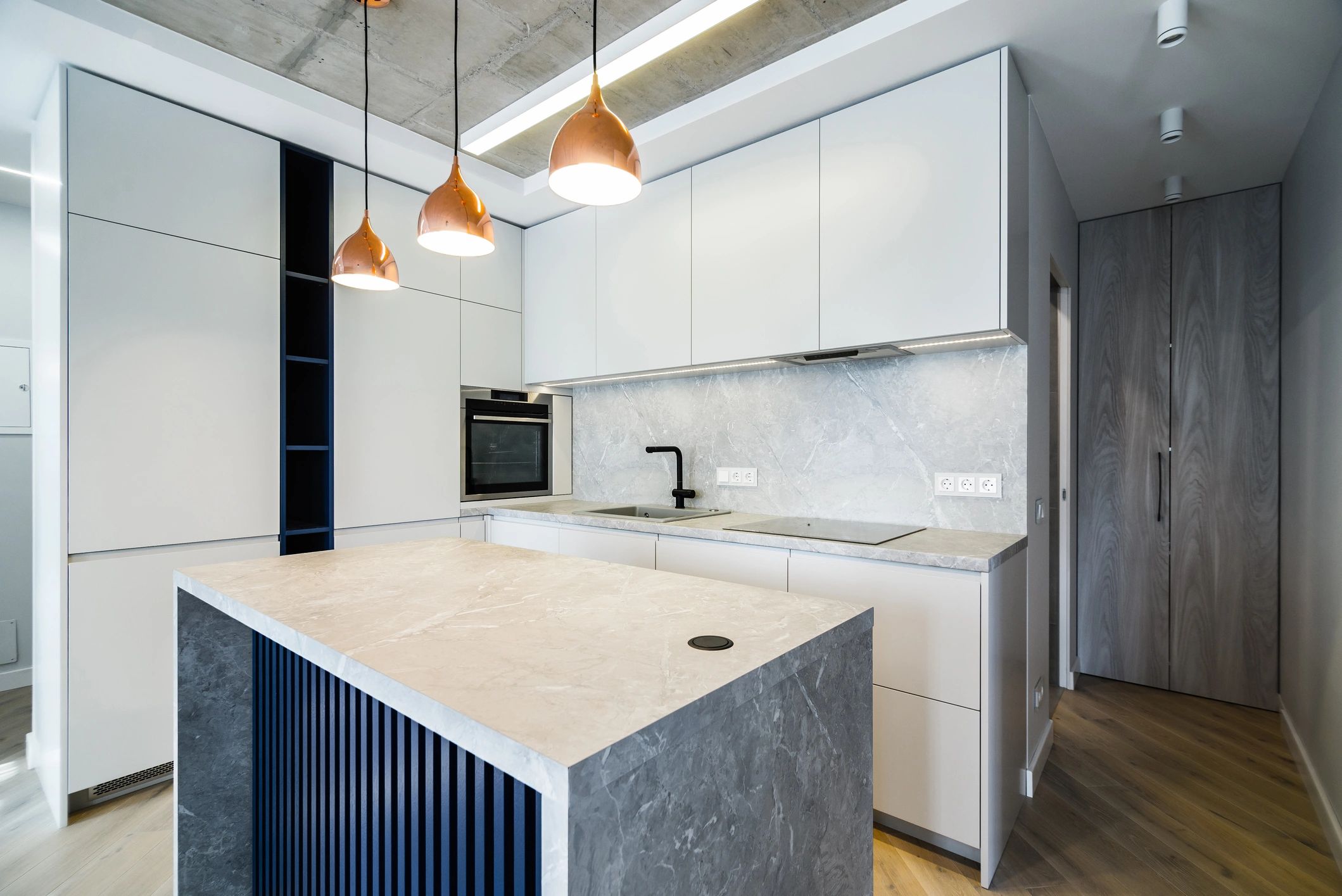
Create a sleek, seamless kitchen with durable microcement finishes for floors, splashbacks, islands and feature surfaces. Cambridge Microcement delivers premium kitchen installations across Cambridge and surrounding Cambridgeshire areas.
Why choose it
A practical finish for modern kitchens
Microcement is a thin, hand-applied decorative coating that creates a continuous surface with very few joints. In kitchens, it is popular for its clean look, easy maintenance and ability to work across floors, walls and bespoke details for a more cohesive design.
For homeowners planning a renovation in Cambridge, microcement can be applied over suitable existing substrates, helping reduce disruption compared with a full rip-out. It also pairs well with contemporary cabinetry, timber accents and underfloor heating. If you are comparing options, you can also explore our microcement floors, microcement walls and bathroom microcement finishes to see how the material performs in other parts of the home.
Benefits
Why microcement works in kitchens
Kitchen microcement FAQs
Answers to common questions about microcement kitchens in Cambridge, including cost, timing and suitability.
Can microcement be used on kitchen worktops?
Yes, microcement can be used on kitchen worktops when the base is sound and the system is installed and sealed correctly. It creates a seamless, contemporary look and is a popular choice for clients who want their worktops and splashbacks to feel more bespoke than standard finishes. For more detail, see our Microcement Worktops Cambridge page.
Can microcement go over tiles?
In many cases, yes. Microcement can often be applied over existing tiles, provided the tiled surface is stable and properly prepared first. This can reduce the need for full strip-out and helps create a smooth, modern finish across kitchen walls, floors or splashback areas. You can also read more on our Microcement Over Tiles Cambridge page.
Is microcement waterproof?
Microcement itself is finished with sealers that help create a water-resistant surface, which is why it is widely used in kitchens, bathrooms and wet areas. The exact level of protection depends on the system used and the quality of installation, so correct preparation, detailing and sealing are essential for long-term performance.
Is microcement better than tiles?
That depends on the look and performance you want. Microcement offers a seamless appearance with fewer grout lines and a more contemporary feel, while tiles offer a wider range of individual patterns and replacement options. Many Cambridge homeowners choose microcement when they want a cleaner, more continuous finish throughout the kitchen.
How much does microcement cost in Cambridge?
Typical projects often fall within the wider range of around £85 to £170 per square metre, depending on preparation, detailing, access and the scope of the kitchen renovation.
How long does a kitchen project take?
Timescales vary with preparation and drying conditions, but many kitchen microcement projects are completed over several days rather than weeks.